
Bzzz! Meet the Honeybee, the Little Hero of the Flowers
Honey, wax, propolis, even the fruit on your plate. The honeybee tells us about its work, the benefits of honey, and why the world needs bees.
Bzzz! Hi, I’m a honeybee. Pumi is lending me the Journal today, because I have so much to tell you about my family. Ready? Let’s fly!
One hive, one big family
A single honeybee hive can hold tens of thousands of bees, and every one of us has a job:
- The queen lays eggs. In the busy season she can lay more than a thousand a day!
- Worker bees (all female) clean the hive, feed the babies, build comb, guard the entrance, and collect nectar.
- Drones (males) mainly exist to mate with queens from other hives.
Our comb is made of hexagonal cells. This shape is super efficient: it holds the most honey using the least wax.
How is honey made?
- We sip nectar, the sweet liquid inside flowers.
- On the way home, the nectar mixes with enzymes from our bodies.
- In the hive, nectar is passed from bee to bee, then stored in cells.
- We fan our wings together so the water evaporates, until the nectar thickens into honey.
- Full cells get sealed with a wax cap.
It’s hard work: over her whole life, one worker bee makes only about one twelfth of a teaspoon of honey. So one jar of honey is the work of thousands of bees!
We can “dance”
When I find a great patch of flowers, I fly home and do a waggle dance inside the hive. The direction of my dance shows where the flowers are compared to the sun, and how long I waggle shows how far away they are.
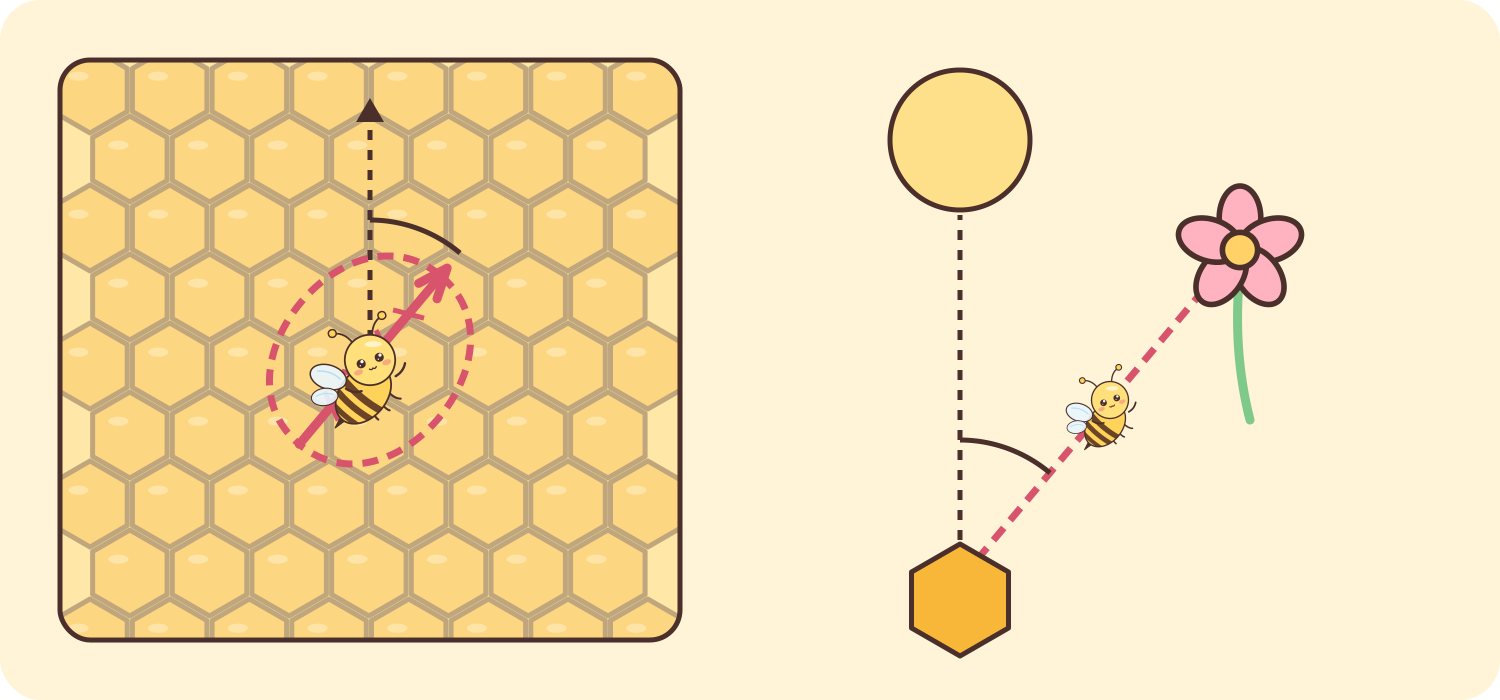
Discovering this dance language earned scientist Karl von Frisch a Nobel Prize in 1973.
Bee products, not just honey
- Honey: a natural energy source. Thanks to its low water content and acidity, honey stored in a sealed jar can keep for a very long time.
- Beeswax: our building material. People use it for candles, lip balm, and food wraps that replace plastic.
- Propolis: “bee glue” made from plant resin, used to seal and keep the hive clean.
- Royal jelly: the special food for future queens.
- Bee pollen: little pellets of pollen we collect as our source of protein.
Benefits of honey for you
- A naturally sweet energy source, lovely in warm tea or yogurt.
- Helps soothe coughs and scratchy throats. Some studies show honey can help relieve coughs in children over one year old.
- Contains antioxidants, in amounts that vary with the flowers. Darker honey is usually richer.
But remember, honey is still sugar. Enjoy it in moderation, and people with diabetes should check with a doctor first.
⚠️ Important: never give honey to babies under 1 year old. Honey can contain bacterial spores that are dangerous for a baby’s gut (infant botulism).
Crystallized honey? Don’t worry, that’s natural and not a sign of fake honey. Stand the jar in warm water (don’t boil it) and it will turn runny again.
Our most important job: pollination
As I hop from flower to flower, pollen sticks to the fuzzy hairs on my body and gets carried to the next flower. That’s pollination, and without it many plants can’t make fruit.
Most of the world’s food crop types benefit from animal pollinators like bees. Think watermelon, melon, cucumber, apples, strawberries, avocado, and coffee. We pollinate wild plants too, whose fruits and seeds feed birds and other animals. One little bee, with an effect on a whole forest!
Bees in Indonesia
Indonesia is home to many kinds of bees, such as the Asian honeybee (Apis cerana), the giant honeybee (Apis dorsata) that builds huge combs on tall trees, and stingless bees known locally as kelulut or klanceng. Their honey is a little sour and very special!
We could use your help
In many places bees are threatened by loss of flowers and habitat, pesticides, diseases and mites, and climate change. You can help in simple ways:
- Plant flowers in your yard or in pots, like sunflowers, cosmos, or coral vine.
- Use fewer pesticides in your garden.
- Put out a shallow dish of water with pebbles so we can drink without drowning.
- Buy honey from local beekeepers you trust.
- If a bee comes close, stay calm. We’re just curious, and most bees only sting when they feel threatened.
Every 20 May is World Bee Day. Mark your calendar! 🐝
Thanks for reading my story all the way through. Now I need to get back to work, the flowers are waiting. Bzzz! 🌼
 Have a suggestion or critique for Pumiland?