
Kori Shows Off a Collection: This Is My Old Outfit!
An empty crab shell on the beach isn’t always a crab that died. Kori explains why crabs have to “change clothes” to grow.
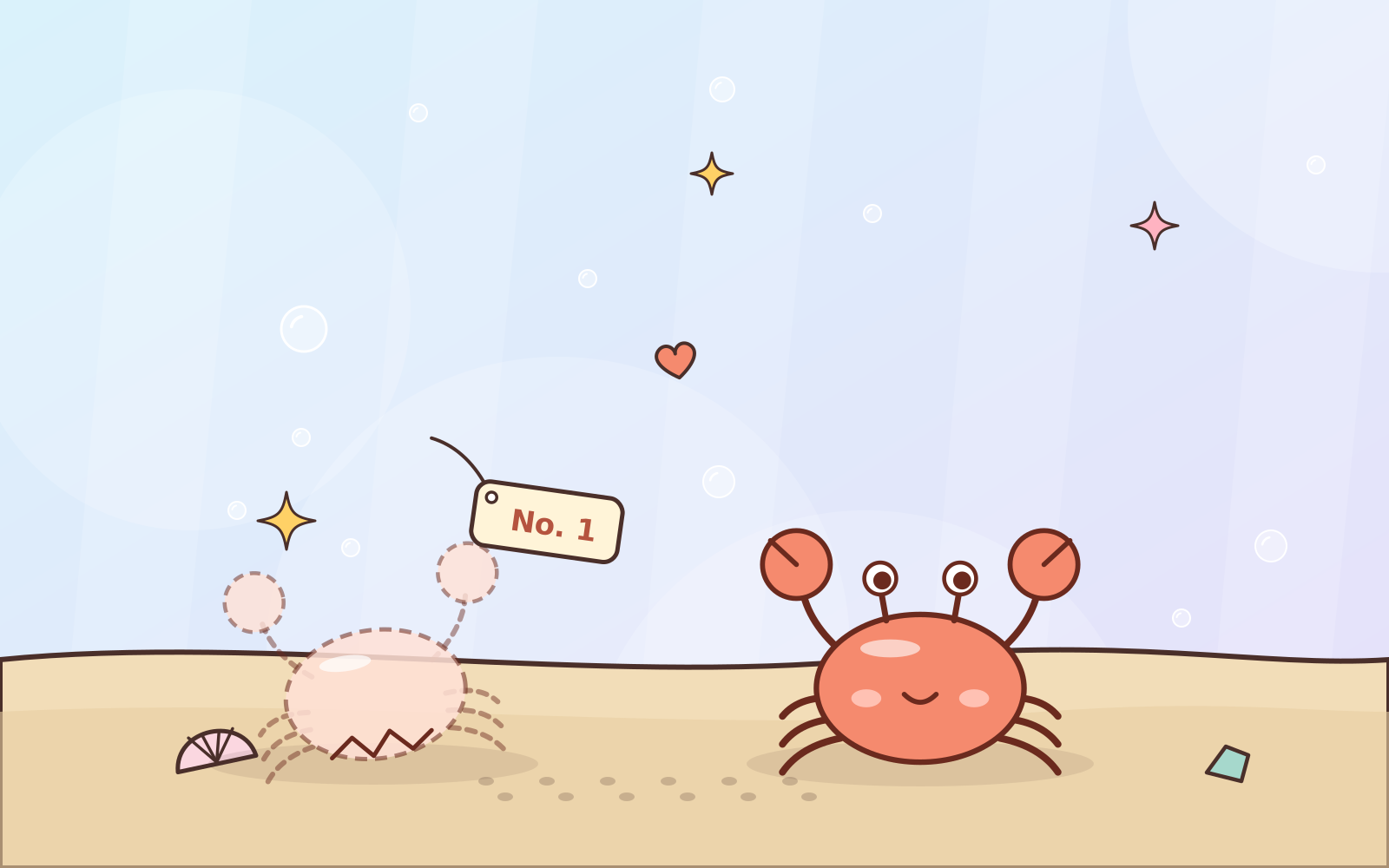
Hi, I’m Kori! My collection shelf has rare shells, sea glass, and odd pebbles. But the thing I’m proudest of is… my own old shell. How come? Here’s the story. 🦀
A skeleton on the outside, not the inside
Your bones are inside your body. Mine are on the outside. It’s called an exoskeleton, made of chitin strengthened with lime. It’s tough like armor, but there’s a catch: this shell can’t grow bigger. So to grow, a crab has to change its shell. This is called molting.
How a crab changes clothes
- A new, still soft shell forms underneath the old one.
- The old shell splits open at the back, and the crab backs out slowly, pulling its legs and claws out of their “sleeves” too.
- The crab takes in lots of water to puff up its body, then the new shell hardens over a few days.
While the shell is still soft, a crab is very vulnerable, so we hide for a while. Crabs caught at this stage are known as soft-shell crabs. Young crabs can molt many times a year, while adults molt less and less often.
That’s why an empty shell on the beach isn’t always a crab that died. It may just be an old outfit its owner left behind. Just like my collection! ✨
Bonus: claws that grow back
If it gets pinched or caught by a predator, a crab can drop its own leg or claw and escape. That leg grows back bit by bit with every molt. It starts out smaller, then slowly returns to normal. A bit like Pumi’s talent in Axolotls Can Regrow Legs, Tails, and Even Parts of Their Heart, though it works differently.
Why do I walk sideways?
A crab’s leg joints bend sideways, so stepping sideways is faster and the legs don’t trip over each other. But not every crab does this! Soldier crabs actually walk forward, marching across the sand in groups!
Growing up sometimes means letting go of the old first, even if it feels a little scary. See you at the beach! 🐚
 Have a suggestion or critique for Pumiland?