
Pipin Almost Moved Into a Plastic Bottle
A clear bottle on the seafloor looks like a cozy home. Pipin explains why plastic in the ocean is a big problem, and what we can do about it.
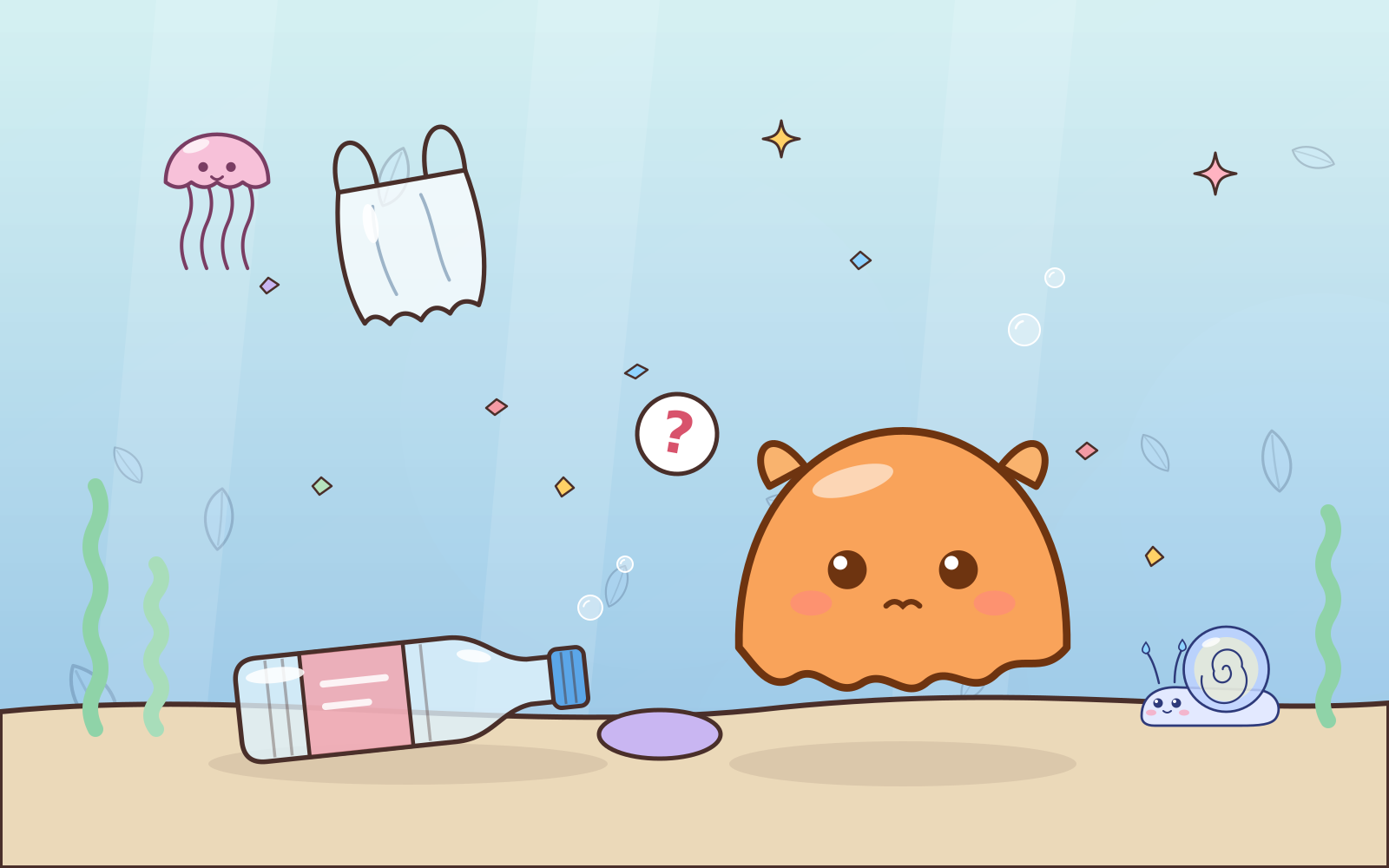
Um… h-hi, it’s Pipin again. Yesterday I found the perfect hiding spot on the seafloor: clear, smooth, and just my size. I was about to move in… until Lumi said, “Pipin, that’s a plastic bottle!” 🐙
Octopuses and homes made of trash
Turns out I’m not the only one. Researchers collected hundreds of photos of octopuses from oceans around the world hiding, and even laying eggs, inside bottles, cans, and old tires. Octopuses love tight holes to shelter in, and when seashells get scarce, trash gets used instead. It looks cute, but plastic can leak chemicals and the edges of cans can cause injuries.
Plastic doesn’t vanish, it just gets smaller
- Fruit peels can break down in a matter of weeks to months. A plastic bottle is estimated to take hundreds of years.
- Plastic in the sea never truly disappears. Sunlight and waves break it into smaller and smaller pieces. Pieces smaller than 5 millimeters are called microplastics.
- Microplastics can be eaten by plankton, then small fish, then bigger fish… and eventually end up on our plates.
Looks like food, but it isn’t
Sea turtles love eating jellyfish. The problem is, a plastic bag drifting in the water looks a lot like a jellyfish. Many turtles, seabirds, and whales have been found with stomachs full of plastic.
All the way to the deepest sea
My real-life cousin, the flapjack octopus, lives in the deep sea (the story is in Pipin Shyly Shares: I Have Three Hearts!), so I thought it was safe down there. But a plastic bag was once found by a robot submarine in the Mariana Trench, almost 11 kilometers below the surface, one of the deepest spots on Earth. 😢
What you can do
- Bring your own water bottle and shopping bag, so you don’t need single-use ones.
- Say no to straws and plastic bags when you don’t really need them.
- Put trash in the bin. Trash in drains and rivers eventually flows to the sea, and often gets tangled in mangrove roots.
- Sort your trash, so bottles and cans can be recycled.
- Join a beach cleanup with a community in your city.
In the end, I’m still hiding behind Lumi’s shell. It’s warmer, and nothing needs to be thrown away. Thank you for helping look after my home! 💙
 Have a suggestion or critique for Pumiland?