
Mangroves, the Green Wall of the Coast
Trees that love salty water, roots that can “breathe”, and a home for Kori’s cousins. Let’s get to know mangrove forests.
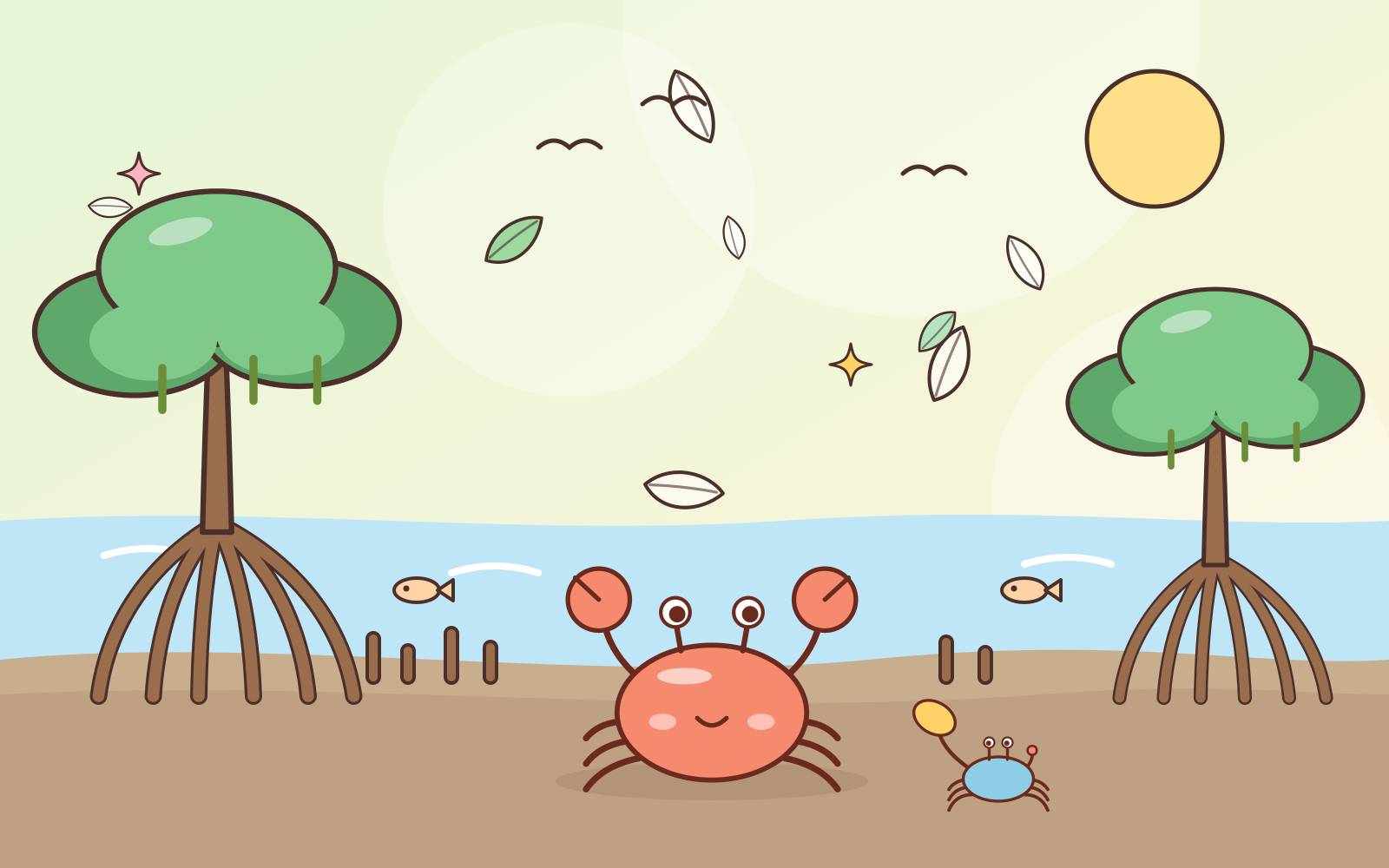
Hi, I’m Kori! This time I’m not bringing shells or sea glass. I want to take you to my favorite spot near the beach: the mangrove forest. 🦀
Trees that love salty water
Most trees wilt when they touch seawater. Mangroves grow happily in coastal mud that’s flooded at high tide and dry again at low tide. Their tricks are so cool:
- Stilt roots on red mangroves arch out from the trunk like support legs, keeping the tree steady in soft mud.
- Breathing roots on grey mangroves poke straight up from the mud like pencils, to take in air.
- Some species can get rid of salt through their leaves. Try licking one… actually, don’t, it’s salty!
- Red mangrove seeds sprout while still on the tree, then drop and stick into the mud, or float away until they find a new spot.
Why do mangroves matter?
- They calm waves and stop erosion. Their tangled roots hold the shoreline together so the sea can’t wash it away.
- They’re a nursery for baby fish, shrimp, and crabs. My cousin, the fiddler crab with one giant claw, lives here!
- They’re carbon-storing champions. Mangroves store far more carbon per hectare than many forests on land, mostly in the mud beneath them.
- They’re natural filters. The mud and roots help trap dirt before water reaches the sea.
Indonesia is the champion
Indonesia has the largest mangrove forests in the world, roughly one fifth of all mangroves on Earth. But some have been lost to fish ponds, logging, and piles of trash.
What you can do
- Don’t litter at beaches or rivers. Plastic often gets stuck in mangrove roots.
- Join a mangrove planting with a community group or at a mangrove park near you.
- When visiting, stay on the boardwalk and don’t break roots or take seedlings.
Every 26 July is International Mangrove Day. 🌱
I may walk sideways, but I always know the way home. And my home is among the mangrove roots. Please look after it!
 Have a suggestion or critique for Pumiland?